So Why Isn’t Everyday Life Like an Episode of “Survivor”?

Image result for survivor

We recently discussed the concepts of things like “The Selfish Gene” and “Survival of the Fittest,” and our general consensus is that human beings as creatures aren’t very nice. Our “natural” behaviors don’t lend themselves to ethical practices. So this leads us to the question, “Why don’t we live like a bunch of animals?” How is is that we aren’t eating, sleeping, and screwing ourselves to death??? That is what survival of the fittest is all about – eat, sleep, and do your very best to make as many genetic copies of yourself as possible – right? Well, that’s true, but human beings aren’t the best survivors when we are on our on… ever watched Naked and Afraid?

Image result for naked and afraid pain

We don’t do very well when exposed to the elements, and we do exceptionally poorly when we are alone. So how do we reconcile the need to “be the fittest” and dominate those around us, thereby, satisfying our biological and evolutionary need to reproduce with the necessity of cohabiting with others and creating a functioning community which ensures the survival of ourselves and others?

Image result for sex drive cartoon

This is where ethics comes in. Without ethical practices and behaviors, evolutionary/biologically driven behaviors would wreck our own survival… i.e. we would be shady/crappy human beings and find ourselves alone and without the benefit of a community to help ensure our survival.

As a species, our need for community generally overrides our biological need to be “top dog.” There are definitely scum bags and crappy people who capitalize on the species’s need for community. These individuals will take advantage and engage in unethical behaviors for the immediate benefits they think they are achieving; however, as we’ve discussed, there is a series of rewards and consequences that we as a society implement on these individuals.

Image result for jailbird cartoon

I hope as we move through the semester, you will begin to see the importance of ethical behaviors for yourself personally and for society as a whole. It’s going to be messy and thought provoking. I will never apologize for making your think about something in a new way, especially if we’ve teased out of of an emotional response an into a philosophical or logical response.

Welcome to Ethics!!

Ethics – Just the Basics, Please

Image result for legal vs moral

Sooooo, you’ve found yourself in an ethics class, and you’re not really sure what to do with it.

Image result for should meme

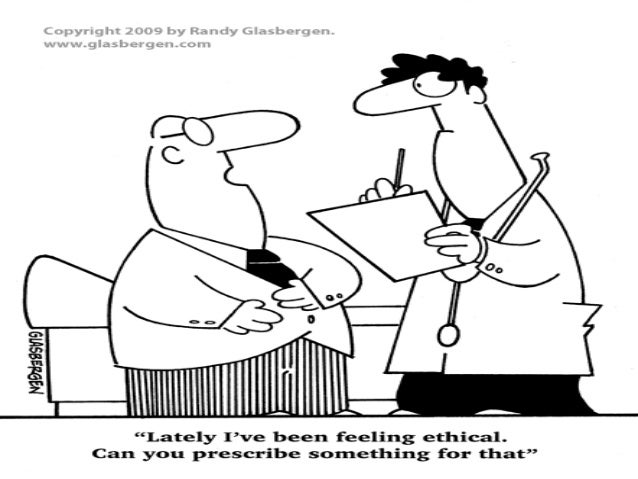
Why should you care about ethics in the first place?

Interestingly, that question will be the easiest one we tackle all semester. You should care about ethics because living an ethical life will ultimately lead to a better life for you and the people you care about.

Related image

We’ve discussed the idea of Should and Ought and how those terms outweigh ideas like “good” and “bad.” They give us a little more to work with. For example, something you consider “bad” is something you should work to avoid… something you consider “evil” is something you should REALLY work to avoid.

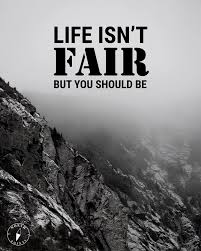
Let’s look at the statement “Life isn’t fair.” You hear people justify their

Image result for "life isn't fair but you should be"

unjust actions all the time with this overused and cliched phrase. Most of the time, they are using it to make themselves feel better because they have just behaved in an “unfair” manner. Just because life is unfair doesn’t mean it should always be that way. If we can work toward living ethical lives, we can eliminate some of those “unfair” instances by doing what we ought to do.

So, the next question is the difference in law and morality/ethics. Is there a difference? Sure there is. While there is some overlap, murder for example is both illegal and unethical. Speeding is a little different. It is illegal, but not always unethical. Other examples that cross and/or blur lines are things like adultery (unethical but not illegal), slavery (was once legal but definitely unethical), lying (unethical but not usually illegal), and mutilation of female genitalia (legal under Sharia law but definitely unethical). There are countless examples, but you get the idea.

Image result for legal vs moral

We also discussed what the pay-offs are for living an ethical life, and you heard me say SEVERAL times that an ethical life isn’t about the short game. It’s all about the long game. The pay-offs aren’t what you get today, this week, or even this month. The pay-offs come incrementally over the course of weeks, months, and years. We listed several things in class, but the general consensus is that your life is just better in every way – less stress, more money, and better relationships. You may not be the life of the party, but your life definitely doesn’t suck.

Related image

We went on to look at the two types on integrity – internal and external integrity. Both require a commitment and mindfulness. Internal integrity is the idea that your whole and complete because what you do isn’t in conflict with what you feel like you ought to be doing. External Integrity is different but linked. It is the commitment to living according to ethical principles – it’s putting your thoughts and “ought to’s” into practice to makes sure that your internal integrity stays solid. It’s treating the janitor and the CEO with the same level of respect.

Image result for ceo and janitor

So, we’re left with our three words – forbidden, permitted, and required. Those words are what we are going to us to tackle our most difficult ethical dilemmas. This helps us avoid judgemental phrasing and remove the emotional attachments that many people use to cloud their arguments. The goal is to build your moral arguments around evidence and sound ethical theory. This might make you uncomfortable or even question some positions you’ve always held because you find they were based solely on emotion and not evidence, theory, or a sound argument. I hope you’re ready to deal with some hard truths about life, ethics, and maybe even yourselves. Let’s get to it!

Image result for living an ethical life meme

Abortion Statistics

In doing some additional reading, I came across and article that outlined Alabama’s specific abortion laws. This was from Guttmacher Institute, and I found it quite interesting… (sorry for all the text, but I wasn’t sure that there were images that were appropriate for such a post).

Guttmacher Institute

State Facts About Abortion: Alabama

National Background and Context

Each year, a broad cross section of people in the United States obtain abortions. In 2017, 862,320 abortions were provided in clinical settings in the United States.

The U.S. Supreme Court recognized the constitutional right to abortion in the 1973 Roe v. Wade decision and has reaffirmed that right in subsequent decisions.

However, since 2010, the U.S. abortion landscape has grown increasingly restrictive as more states adopt laws hostile to abortion rights. Between January 1, 2011 and July 1, 2019, states enacted 483 new abortion restrictions, and these account for nearly 40% of all abortion restrictions enacted by states in the decades since Roe v. Wade. Some of the most common state-level abortion restrictions are parental notification or consent requirements for minors, limitations on public funding, mandated counseling designed to dissuade individuals from obtaining an abortion, mandated waiting periods before an abortion, and unnecessary and overly burdensome regulations on abortion facilities.

Abortion Incidence

•Approximately 862,320 abortions occurred in the United States in 2017. The resulting abortion rate of 13.5 abortions per 1,000 women of reproductive age (15–44) represents an 8% decrease from the 2014 rate of 14.6.[1]

•In 2017, 6,110 abortions were provided in Alabama, though not all abortions that occurred in Alabama were provided to state residents: Some patients may have traveled from other states, and some Alabama residents may have traveled to another state for an abortion. There was a a 23% decline in the abortion rate in Alabama between 2014 and 2017, from 8.3 to 6.4 abortions per 1,000 women of reproductive age. Abortions in Alabama represent 0.7% of all abortions in the United States.[1]

Where Patients Obtain Abortions

•In 2017, there were 1,587 facilities providing abortion in the United States, representing a 5% decrease from the 1,671 facilities in 2014. Sixteen percent of facilities in 2017 were abortion clinics (i.e., clinics where more than half of all patient visits were for abortion), 35% were nonspecialized clinics, 33% were hospitals and 16% were private physicians’ offices. Sixty percent of all abortions were provided at abortion clinics, 35% at nonspecialized clinics, 3% at hospitals and 1% at physicians’ offices.[1]

•There were 7 facilities providing abortion in Alabama in 2017, and 5 of those were clinics. These numbers represent no change in clinics from 2014, when there were nine abortion-providing facilities overall, of which five were clinics.[1]

•In 2017, 89% of U.S. counties had no clinics providing abortions. Some 38% of reproductive-age women lived in those counties and would have had to travel elsewhere to obtain an abortion.[1] Of patients who had an abortion in 2014, one-third had to travel more than 25 miles one way to reach a facility.[2]

•In 2017, some 93% of Alabama counties had no clinics that provided abortions, and 59% of Alabama women lived in those counties.[1]

Restrictions on Abortion

In Alabama, the following restrictions on abortion were in effect as of March 1, 2020:

  • A patient must receive state-directed counseling that includes information designed to discourage the patient from having an abortion, and then wait 48 hours before the procedure is provided.
  • Health plans offered in the state’s health exchange under the Affordable Care Act can only cover abortion in cases of life endangerment, rape or incest.
  • The use of telemedicine to administer medication abortion is prohibited.
  • The parent of a minor must consent before an abortion is provided.
  • Public funding is available for abortion only in cases of life endangerment, rape or incest.
  • A patient must undergo an ultrasound before obtaining an abortion; the provider must offer the patient the option to view the image.
  • An abortion may be performed at 20 or more weeks postfertilization (22 weeks after the last menstrual period) only in cases of life endangerment or severely compromised physical health. This law is based on the assertion, which is inconsistent with scientific evidence and has been rejected by the medical community, that a fetus can feel pain at that point in pregnancy.
  • The state requires abortion clinics to meet unnecessary and burdensome standards related to their physical plant, equipment and staffing.

References

1. Jones RK, Witwer E and Jerman J, Abortion Incidence and Service Availability in the United States, 2017, New York: Guttmacher Institute, 2019.

2. Fuentes L and Jerman J, Distance traveled to obtain clinical abortion care in the United States and reasons for clinic choice, Journal of Women’s Health, 2019, https://doi.org/10.1089/jwh.2018.7496.

ESPN Special about Transgender Wrestler

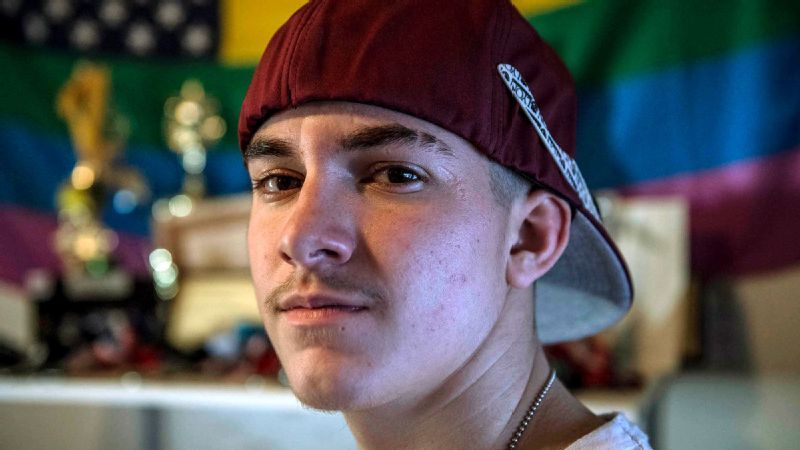
A two-time high school wrestling champion, Mack Beggs went 92-0 in his final two seasons on the mat.

Our presentation today was about transgender athletes and our discussion largely focused on the difficulties that female athletes face when they are forced to compete with biological male athletes who are choosing to compete against them, but what about the female athlete who identifies as a a male, but is forced to compete against girls because of a “birth certificate law?”

Meet Mack Beggs – “Mack Wrestles” is an ESPN 30 for 30 short that tells the story of a wrestler who was assigned female at birth, and because of Texas law, was forced to compete against girls in spite of his transition, which included steroid and hormone replacement therapy beginning his sophomore year in high school. Beggs asked to compete in the boys’ division, but the rules required him to wrestle in the girls’ division.

wrestler Mack Beggs

Since winning back-to-back Texas high school state championships, he has since had “top surgery” in his transition process and has had his birth certificate reissued in the state of Texas. He is a student athlete at Life University in Georgia and is will be wrestling this year on the men’s team.

We asked lots of questions, but didn’t come up with many answers, and I think that’s the point of an ethics class. Some things are simple and straightforward, while others are more complicated. This is an issue that is coming at us quickly, and as we continue to examine it, it is going to get messier. I think it’s like JB said – we’re just not ready!

How do the needs of the many compare to the needs of the few? Which takes precedence? How do we preserve a balance? Competition is part of our natures, so how do we try to preserve a level playing field? Do we divide by gender, weight, height? Are there other ways to classify human beings to try and keep things “fair”? Is there any such thing as fair?

Related image

http://www.espn.com/espnw/voices/article/27652214/what-does-journey-transgender-wrestler-mack-beggs-teach-us

https://www.star-telegram.com/sports/dfwvarsity/article226444165.html

Jim Jones and Monkeys??

Remember when Amber told us about Jim Jones and the monkeys?? Instagram’s Historiumpostcast posted a photo of Jim Jones with some of those monkeys…

Welcome to Ethics!

I’m so happy you are here! So what is the study of ethics – it should be pretty simple stuff, right? People should do what’s right and avoid doing what is wrong. Follow the Golden Rule, right? It’s not as simple as you might think. We are going to explore some of the major ethical theories and examine which ones work and which ones don’t – why? and why not?

You are going to be asked to examine what is right and wrong and what those concepts mean. We are also going to get REAL with it in terms of your next step. We are going to look at medical, business, education, industry, and real-world ethical situations that you will probably find yourself in at some point. We are going to ask the hard questions and really get into the tough issues, so get ready!